
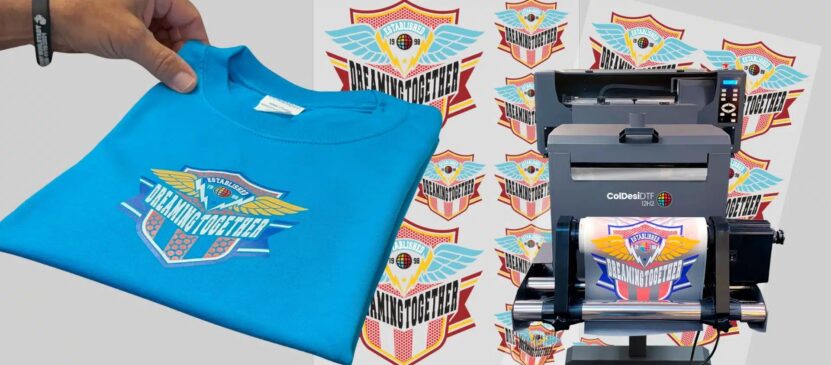
In the fiercely competitive world of custom garment decoration, efficiency is not just a benefit; it is the currency of success.
For years, printing businesses have navigated the challenges of minimum order quantities, material wastage, and the laborious process of preparing individual designs.
However, the advent of Direct-to-Film (DTF) technology has fundamentally reshaped the landscape, offering a quality, durable, and versatile solution.
At the heart of this revolution, delivering unprecedented cost-effectiveness, lies the strategic use of the ‘gang sheet’.
This comprehensive guide delves into why the DTF gang sheet has become the preferred choice for forward-thinking print shops across the UK, offering a pathway to dramatically streamline operations, cut costs, and unlock the full potential of your printing setup.
Understanding and mastering this methodology is essential for any business aiming for sustainable growth and a healthy bottom line.
What Exactly is a DTF Gang Sheet?
The term ‘gang sheet’ may sound intimidating, but its concept is delightfully simple.
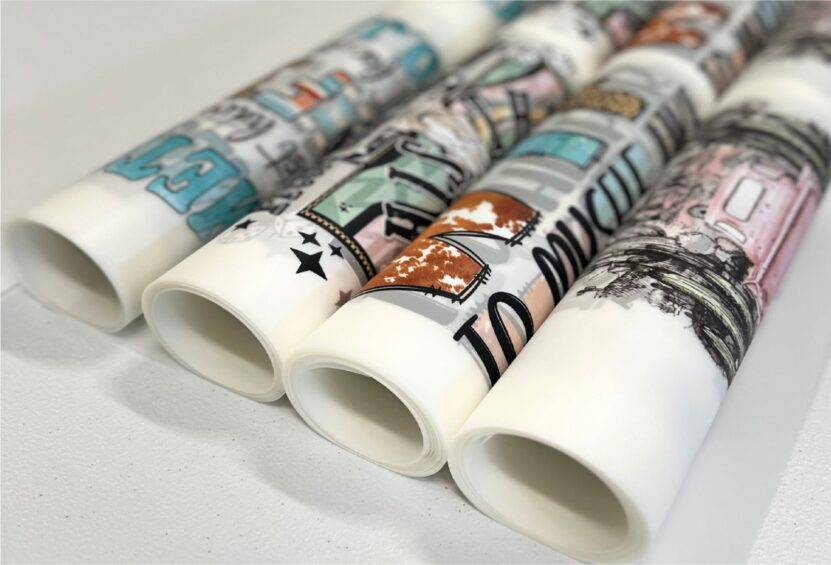
In the context of Direct-to-Film printing, a gang sheet is essentially one continuous, pre-sized sheet or roll of DTF transfer film upon which multiple separate designs are arranged and printed simultaneously.
Instead of sending a single large logo or one small breast pocket design to the printer at a time, you are consolidating a ‘gang’—a collection—of disparate design elements onto one usable area.
The process leverages the strengths of DTF technology itself.
DTF printing involves printing an image onto a special film using water-based pigment inks, followed by applying an adhesive powder while the ink is still wet. This composite (ink and adhesive) is then cured, resulting in a ready-to-press transfer.
The genius of the gang sheet is that it treats this entire roll of film, say a metre or more in length, as a single canvas.
This consolidation means that designs of different sizes, for different clients, or for different areas of a garment (e.g., a large back print, a small sleeve logo, and a cap design) can all be placed together.
The printer runs one job, one time, minimising the pauses and start-up cycles associated with multiple smaller print jobs.
Crucially, the final, printed sheet is then cut by the user into the individual transfers needed, ready for application onto the final garment using a standard heat press.
The Efficiency Revolution: Why Go ‘Gang’?
The shift from individual design printing to the gang sheet methodology yields a cascade of operational benefits that directly impact profitability.
This is where the time and material savings truly come into their own.
1. Material Optimisation and Waste Reduction
The most immediate and compelling advantage is the drastic reduction in wasted film.
When printing designs individually, there is often significant unused space around each transfer, especially if the designs are irregularly shaped or small.
A gang sheet demands that the designer or operator meticulously arrange designs, fitting them together like a complex jigsaw puzzle, right up to the edges of the printable area.
Every square centimetre of the film is accounted for, eliminating the costly ‘dead space’ that plagues less efficient methods.
By buying DTF film per metre and filling every inch, the cost per transfer plummets.
2. Streamlined Labour and Time Savings
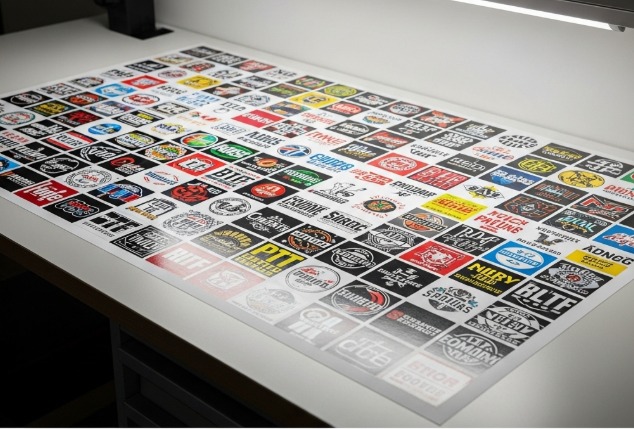
Consider the labour involved in preparing and printing five separate orders.
Each one requires file checking, loading the printer, initiating the print cycle, curing the transfer, and then unloading. With a gang sheet, five (or even fifty) designs are consolidated into a single print run.
This drastically reduces operator oversight time. A printer operator can prepare one large, complex file for printing, hit ‘go’, and then dedicate their time to other productive tasks whilst the machine handles the entire job in one go.
The time saved in loading, unloading, and repeating the cycle for dozens of small jobs quickly adds up to hours over the course of a week.
3. Consistency and Quality Control
Printing everything on one continuous run ensures a uniformity of colour and quality that is harder to guarantee across multiple separate print jobs.
Variations in printer temperature, ink flow, or environmental factors (humidity, static) can subtly affect colour consistency between print runs.
By ‘ganging’ all related (or even unrelated) designs, the printer is operating under one set of conditions for the entire process, resulting in flawless colour matching and a consistent finish across all transfers, regardless of their individual size or intended application.
A Smart Investment for UK Print Businesses
For small to medium-sized enterprises (SMEs) in the UK print sector, cash flow and capital expenditure are crucial considerations.
DTF gang sheets represent a strategic financial move that requires minimal up-front investment but delivers immediate returns in output capacity.
Traditional printing methods often necessitate significant investment in complex machinery like screen printing setups or expensive direct-to-garment (DTG) printers that require extensive maintenance and pre-treatment.
By contrast, utilising a DTF gang sheet service allows even the smallest business to access industrial-level printing quality without owning the hardware.
They simply submit a pre-arranged file, and the transfers are returned to them ready for pressing.
Furthermore, purchasing your transfers pre-printed on a dtf gang sheet per metre basis provides transparent and predictable costing. You know exactly what you are paying for the usable area, allowing for precise job quoting and margin calculation.
This certainty is invaluable in business planning, especially when managing fluctuating material costs and client demands. It bypasses the need for managing ink levels, adhesive powder stock, and machine maintenance, letting the business owner focus solely on design, customer service, and the final heat-pressing stage.
This outsourcing of the most complex part of the process dramatically lowers the operational barrier to entry and scales up production capacity instantly.
Maximising Your Metre: Tips for Layout and Design
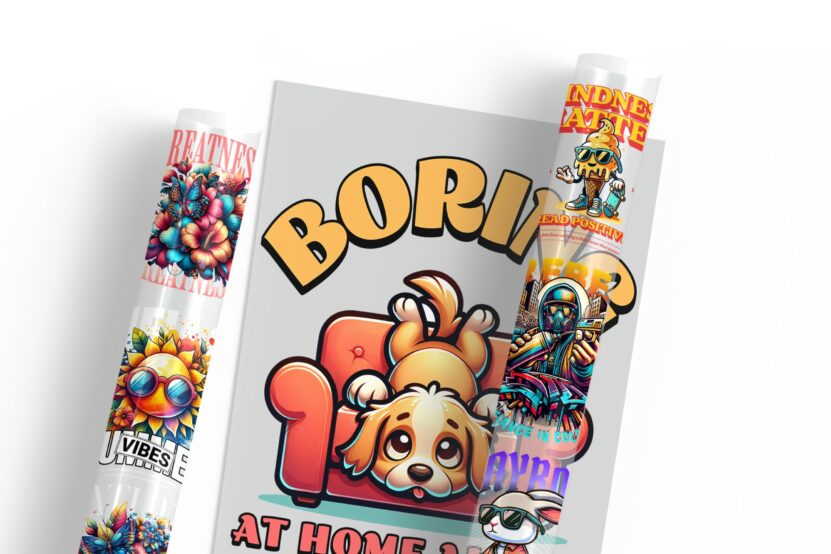
Achieving true efficiency with gang sheets is an art form that requires meticulous file preparation.
The difference between an average gang sheet and a perfect one is often found in the spacing and arrangement.
Here are the key considerations for maximising your usable print area:
1. The Tight Squeeze
The goal is to leave the absolute minimum space between designs while still allowing for easy and safe cutting.
A gap of 5mm to 10mm between designs is typically sufficient. The cutter needs enough space to run a clean line without risking damage to an adjacent design.
Avoid leaving large square or rectangular gaps; instead, rotate designs (e.g., place a curved text design next to the curve of a circular logo) to interlock them and fill all available corners and voids.
2. Bleed and File Format
DTF printing does not typically require a traditional ‘bleed’ (an extension of the design colour beyond the cut line) because the printed transfer film is simply cut around the design, not trimmed to an exact edge.
The key is to ensure the background of your file is fully transparent.
Submitting the design as a high-resolution PNG file with a transparent background is the industry standard.
The printing software uses this transparency to determine where the white under-base layer and the adhesive powder will not be applied.
3. Size Verification and Orientation
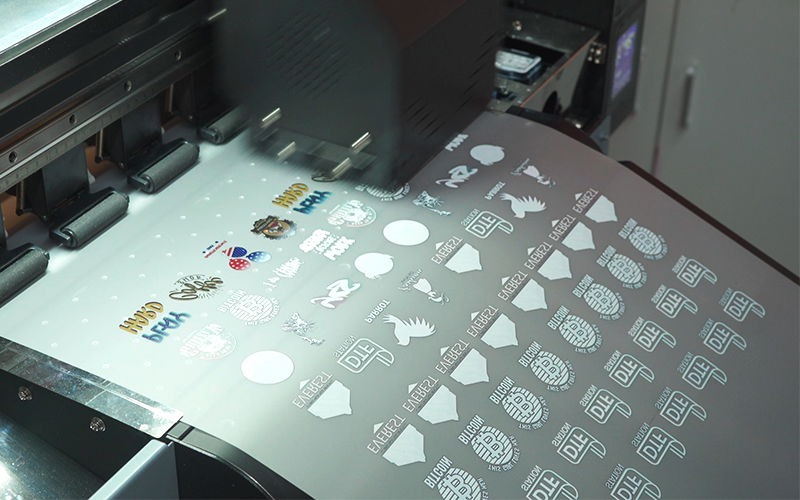
Always double-check the final dimensions of each design before assembling the gang sheet. It is a common error to print a logo at 10cm wide when the client requested 8cm.
Once the sheet is printed, the size is fixed.
Additionally, whilst you can rotate designs to fit them efficiently, ensure any orientation that will aid the cutting process is considered.
For instance, grouping all square-cut designs together can expedite the trimming phase.
Conclusion: The Future of Film
The DTF gang sheet is more than just a printing format; it’s an operational strategy. It represents a move away from the time-consuming, wasteful printing practices of the past and towards a lean, optimised workflow.
By condensing multiple jobs into a single, high-quality, continuous print run, UK print businesses can significantly reduce material waste, save precious labour hours, and improve the consistency of their final product.
In an industry where margins are often tight, embracing the efficiency of the gang sheet is not optional—it is fundamental to maintaining a competitive edge.
It allows businesses to handle a higher volume of small, customised orders with the speed and reliability typically associated with large-scale production, ensuring that their metre of film delivers maximum return on investment.