
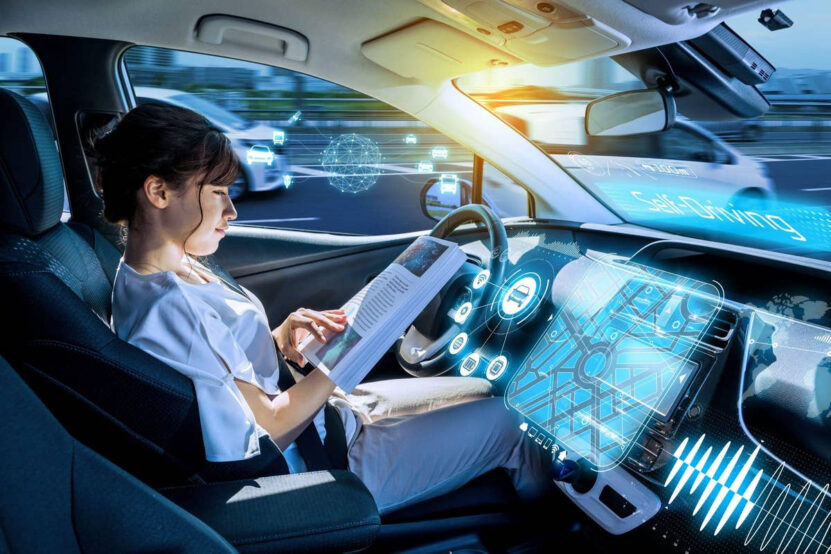
Automotive radar is no longer a feature buyers see only on luxury sedans or expensive driver-assistance packages. It is moving deeper into mainstream vehicles as automatic emergency braking, adaptive cruise control and other collision-avoidance functions become standard or widely available across lower-priced trims.
The change is being driven by tougher safety-performance rules, near-universal adoption of AEB and cheaper, more integrated sensor electronics.
That does not mean governments are ordering manufacturers to install radar. Regulators generally set performance requirements and leave automakers free to meet them with radar, cameras, lidar or combinations of sensors.
In practice, however, radar remains valuable because it measures distance and relative speed directly and can continue working in darkness and many visibility conditions that challenge cameras.
Safety rules are raising the bar for automatic braking
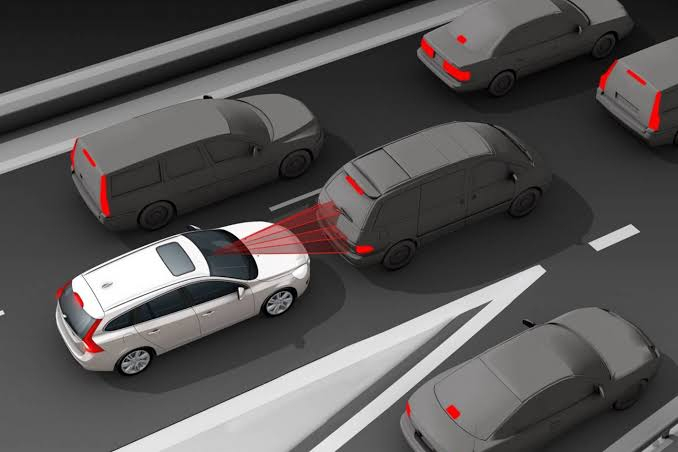
In the United States, the National Highway Traffic Safety Administration finalized Federal Motor Vehicle Safety Standard No. 127 in 2024.
The federal automatic emergency braking rule requires AEB, pedestrian AEB and forward collision warning on new passenger cars and light trucks beginning September 1, 2029.
The rule sets demanding performance targets rather than requiring a particular sensor. Among the requirements, compliant systems must:
- Avoid contact with a vehicle ahead at speeds up to 62 mph in specified tests.
- Apply automatic braking in certain imminent-crash situations at speeds up to 90 mph.
- Detect pedestrians in both daylight and darkness.
- Provide forward collision warning before an impact risk becomes critical.
Those targets increase pressure for reliable long-range sensing and accurate closing-speed measurements, areas where radar can complement cameras.
Europe is following the same performance-first approach
The European Union is also making advanced safety technology more common through its General Safety Regulation. EU rules have been introduced in phases, with advanced emergency braking and other driver-assistance requirements applying across new vehicle categories on defined schedules.
The European Commission’s safety overview lists advanced emergency braking capable of detecting cars, pedestrians and bicycles among the required technologies.
The important distinction is regulatory: Europe and the United States require safety performance, not a specific radar architecture.
That leaves manufacturers room to use camera-only designs, radar-camera fusion or more complex multi-sensor systems. As tests become harder, particularly at night and at higher speeds, dependable distance and velocity data become more valuable in the engineering trade-off across high-volume models for manufacturers worldwide.
Radar hardware is becoming easier to scale across vehicle lines
A modern radar module packages antennas, radio-frequency circuitry, power management, processing and vehicle communications into a compact unit that can sit behind a bumper, grille or body panel. As automakers install more sensors across more trims, manufacturing consistency becomes as important as raw capability.
Components such as an automotive PCB must support repeatable assembly, thermal stability and dependable electrical performance across large production runs.
Three changes are helping radar move downmarket:
- Semiconductor integration is reducing the amount of separate hardware inside each module.
- Common vehicle platforms let manufacturers reuse sensor designs across several models.
- Centralized computing can move more processing away from individual sensors.
Infineon describes centralized radar architectures that send raw sensor data to a central vehicle computer, potentially lowering system cost while improving performance.
AEB was already close to universal before the federal deadline
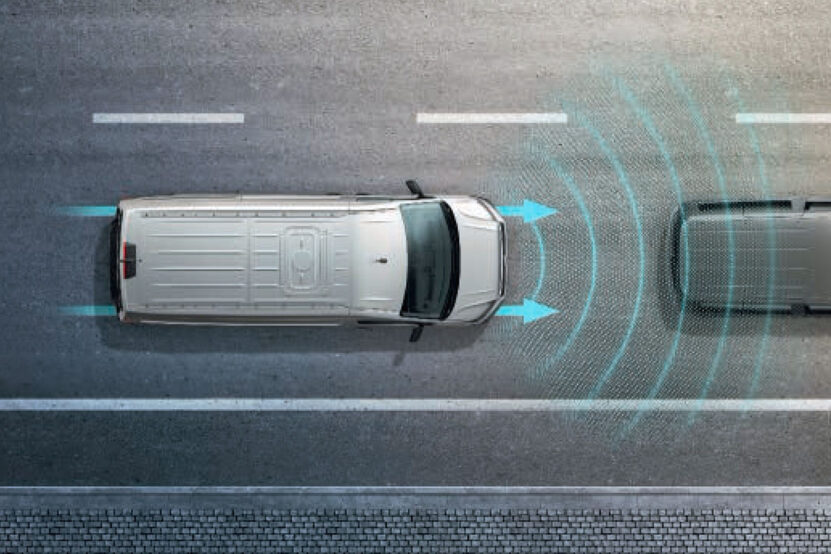
The market had moved substantially before the 2029 U.S. requirement was finalized. In December 2023, the Insurance Institute for Highway Safety reported that all 20 automakers in a voluntary AEB commitment had equipped more than 95 percent of their qualifying light-vehicle production with automatic emergency braking.
Did you know? That voluntary commitment began years before the federal rule and helped make city-speed AEB normal even on many affordable cars.
The shift matters because once a vehicle already has forward sensors, electronic braking control and the computing needed for collision detection, manufacturers have a foundation for related features. Adaptive cruise control, pedestrian detection and other functions can share parts of that sensor and software stack, even when some remain optional on lower trims.
Radar and cameras solve different parts of the same problem
Cameras are strong at recognizing visual details such as lane markings, traffic signs and object shapes. Radar is strong at measuring how far away an object is and how quickly the gap is changing.
Many driver-assistance systems combine the two because neither sensor is perfect on its own.
| Function | Radar contribution | Camera contribution |
| Automatic emergency braking | Distance and closing speed | Object recognition and classification |
| Adaptive cruise control | Tracks vehicles ahead | Adds lane and road context |
| Blind-spot assistance | Detects nearby moving vehicles | Can provide visual context |
Radar still has limitations. Reflections, road geometry, sensor blockage and alignment errors can affect performance. That is why manufacturers increasingly rely on sensor fusion rather than expecting one device to understand every road situation in real traffic.
Mainstream cars already show how normal radar has become
The 2026 Toyota Corolla offers a clear example because it is a mass-market compact, not a premium model.
Toyota says its Safety Sense technology for the 2026 Corolla includes Pre-Collision System with Pedestrian Detection and Dynamic Radar Cruise Control, while some functions use both the vehicle’s camera and radar.
The wider trend is visible across the industry:
- Forward radar supports AEB and adaptive cruise control.
- Corner radar can support blind-spot monitoring and rear cross-traffic alerts.
- Higher-resolution imaging radar is being developed for more advanced driver-assistance systems.
Radar is also part of a broader sensor-rich vehicle design trend.
Automakers use advanced sensing tools in automotive engineering for tasks ranging from driver assistance to identifying unwanted noise and vibration during vehicle development today.
More standard sensors can make collision repairs more expensive
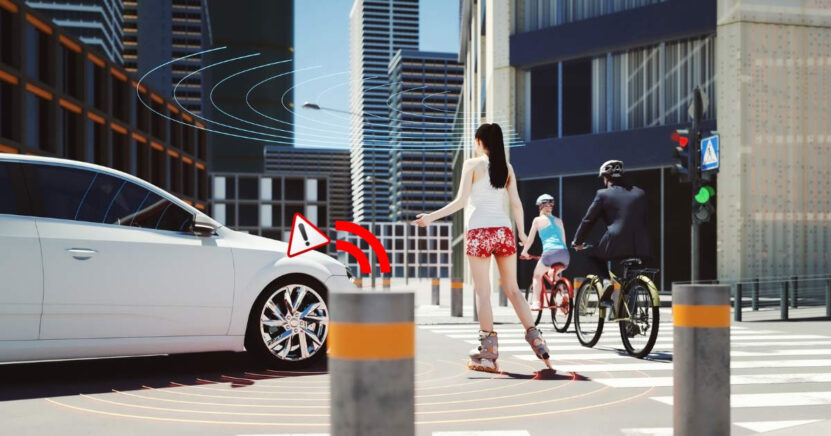
The move toward standard radar has a less visible consequence: bumper damage can now involve electronics as well as bodywork. Radar sensors are commonly mounted behind exterior panels, so a minor collision may require sensor inspection, replacement or calibration even when the vehicle remains drivable.
AAA’s study of three 2023-model-year vehicles found several additional ADAS repair costs:
- Front radar replacement or calibration ranged from $500 to $1,300.
- Front-camera work ranged from $600 to $800.
- ADAS-related windshield work added $360 in the study scenario.
- Some advanced-system costs represented a substantial share of the total repair bill.
- Calibration was required to restore correct sensor operation after certain repairs.
The AAA repair-cost findings exclude ordinary bodywork, which makes the sensor expense especially important for owners comparing repair estimates.
Calibration is now part of ordinary vehicle repair
Replacing a damaged radar sensor is not always enough. The unit must also point in the correct direction and communicate properly with the vehicle’s control systems.
A small mounting error can change what the sensor “sees,” which is why automakers specify calibration procedures after certain collisions, bumper repairs, alignments or component replacements.
A radar sensor can be physically intact and still require calibration if its position or aiming has changed.
Depending on the model, a shop may use static targets, diagnostic equipment, an on-road calibration procedure or a combination of methods.
Owners should therefore ask whether ADAS calibration is included in a repair estimate rather than judging the job only by the visible body damage.
Dashboard warnings that remain after mud, snow or ice is cleared from a sensor area also deserve inspection.
Buyers should compare safety equipment by trim, not model name
“Standard safety technology” can mean different things from one trim to another. A model may include AEB on every version but reserve adaptive cruise control, blind-spot monitoring or additional corner radar for a higher package.
Buyers should check the equipment list for the exact vehicle they are considering instead of assuming every advertised feature is included.
Before choosing a trim, confirm:
- Whether AEB detects pedestrians, cyclists or other vulnerable road users.
- Whether adaptive cruise control works down to a full stop or only above a minimum speed.
- Whether blind-spot and rear cross-traffic functions are standard or optional.
Those differences affect more than convenience. They determine which sensors are installed on the vehicle, what functions are available and what calibration or repair work may be needed after future body, windshield or suspension work.
Radar is becoming ordinary hardware, not a shortcut to autonomy
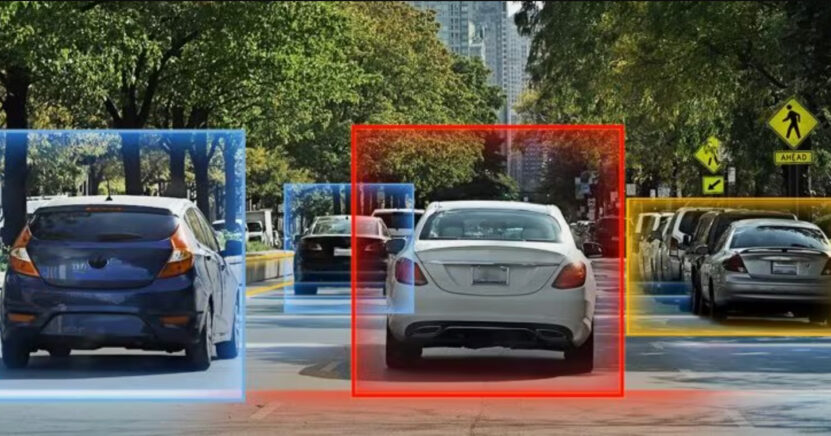
The biggest change is not that radar itself has suddenly become mandatory. It is that collision-avoidance performance once associated with premium vehicles is becoming an expected part of the mainstream market.
Stronger AEB requirements, wider adoption of adaptive cruise control and more integrated electronics are giving radar a larger role in everyday vehicle design.
That should not be confused with self-driving capability. A car can carry several radar sensors and still rely on the driver for continuous supervision and control.
For buyers, the practical result is straightforward: advanced sensors are becoming normal equipment, but their capabilities, limitations and repair requirements still vary by vehicle.