
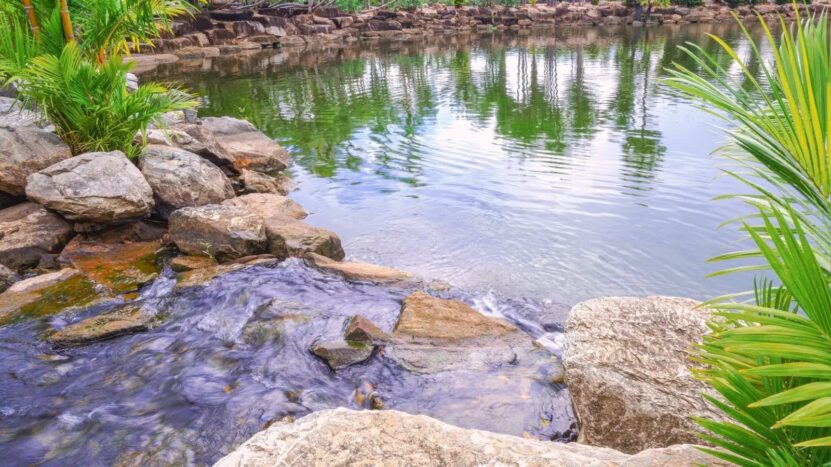
Stand next to almost any lake or pond, and the water may look calm and simple. Under that surface, a lot is going on.
Oxygen rises and falls during the day, nutrients move through the water, algae and plants grow, and the weather keeps changing the conditions.
When the system stays balanced, the water supports fish, wildlife, and normal plant growth. When the balance shifts, problems start to appear. Water may turn cloudy, algae can spread quickly, strange odors may appear, and fish may struggle.
Understanding a few basic things about water quality makes it much easier to see what is happening in a lake or pond.
Why Every Lake And Pond Develops A Different Water Chemistry?
Size, depth, surrounding land, and the material resting on the bottom all influence how the system behaves over time.
The watershed shapes the water
The watershed includes all land that drains toward a lake or pond. Rainwater flowing over soil, lawns, roads, or farmland carries nutrients and particles into the water.
Common inputs include:
- fertilizer from lawns or agriculture
- soil from erosion
- organic debris such as leaves and plant matter
- animal waste
- stormwater runoff
Even small changes in land use near a lake can increase nutrient levels and encourage algae growth.
Depth and basin shape influence mixing
Shallow ponds usually mix easily when the wind moves the surface. Oxygen spreads more evenly through the water column in these systems. Deeper lakes behave differently. Warm surface water can sit on top of cooler deep water during warm months, forming separate layers.
When that layering develops, oxygen levels near the bottom may fall because surface water stops circulating downward.
Sediment on the bottom stores nutrients
Leaves, algae, and plant debris slowly sink and accumulate over time.
As this material breaks down, nutrients can move back into the water column. In systems with heavy buildup, sediment may become a continuous internal source of phosphorus that fuels algae growth.
Water sources influence chemistry
Water entering a lake or pond can come from different places.
Some systems rely mainly on rainfall and surface runoff. Others receive groundwater or stream inflow. Groundwater usually carries more dissolved minerals, which affect alkalinity and conductivity.
Runoff from developed areas often brings higher nutrient loads and suspended sediment.
Climate and sunlight affect biological activity
Temperature and sunlight strongly influence how quickly organisms grow in water.
Warm conditions increase biological activity, allowing algae and bacteria to multiply faster. Sunlight drives photosynthesis during the day, which increases oxygen levels. Long periods of cloudy weather reduce photosynthesis and can lower oxygen in the water.
The Hidden Engine Of Water Quality: Oxygen, Temperature, And Mixing
Most water quality problems begin with three physical processes: oxygen levels, water temperature, and how water mixes from top to bottom. These factors control biological activity, nutrient movement, and fish survival.
Dissolved oxygen drives the ecosystem
Dissolved oxygen is one of the most important measurements in lake management. Fish, aerobic bacteria, and aquatic insects depend on it.
Oxygen enters water in two main ways:
- photosynthesis from algae and aquatic plants
- diffusion from the atmosphere, especially when wind disturbs the surface
Levels change during the day. Photosynthesis increases oxygen during daylight. At night, plants and algae consume oxygen through respiration.
Because of this cycle, the lowest oxygen levels usually occur just before sunrise.
If dissolved oxygen drops below about 5 mg/L, fish stress increases. Severe depletion can lead to fish kills.
Temperature controls oxygen capacity
Water temperature directly affects how much oxygen water can hold.
Cold water holds more oxygen. Warm water holds less. As temperatures rise during summer, oxygen availability drops while biological demand increases.
This combination creates higher stress on fish and increases the risk of oxygen depletion.
Temperature also influences:
- algae growth rates
- bacterial decomposition of organic matter
- fish metabolism and feeding behavior
Stratification separates the water column
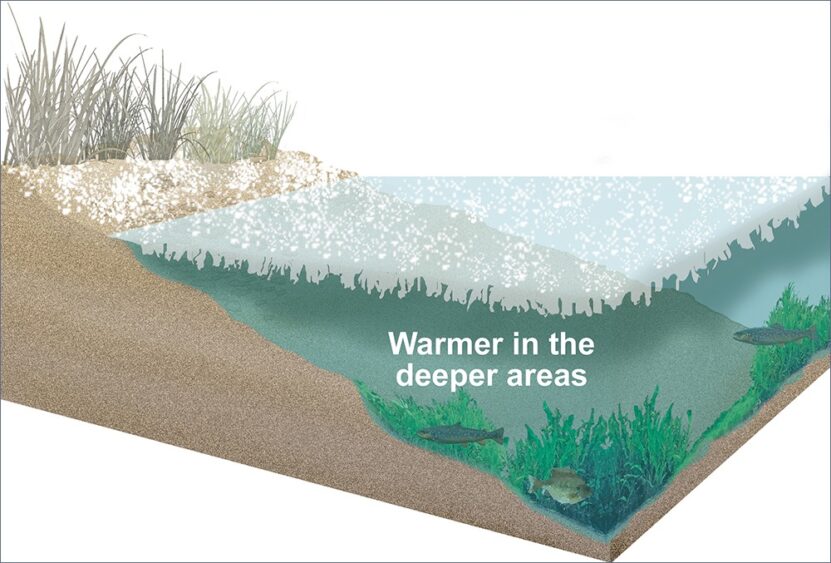
In deeper lakes, temperature differences create layers during warm months.
Three layers typically form:
- warm surface layer
- transition layer where temperature drops rapidly
- colder bottom layer
These layers reduce vertical mixing. Oxygen produced at the surface does not easily reach deeper water.
Over time, oxygen in the bottom layer can fall to very low levels.
Seasonal mixing redistributes oxygen and nutrients
When surface water cools in autumn, the density difference between layers disappears. Wind can then mix the entire lake from top to bottom.
This event is known as turnover.
Turnover moves oxygen into deeper zones but can also bring nutrients and organic material from the bottom back into the upper water column.
For lake managers, understanding oxygen, temperature, and mixing patterns helps explain many seasonal changes in water quality.
Nutrients And The Start Of Eutrophication
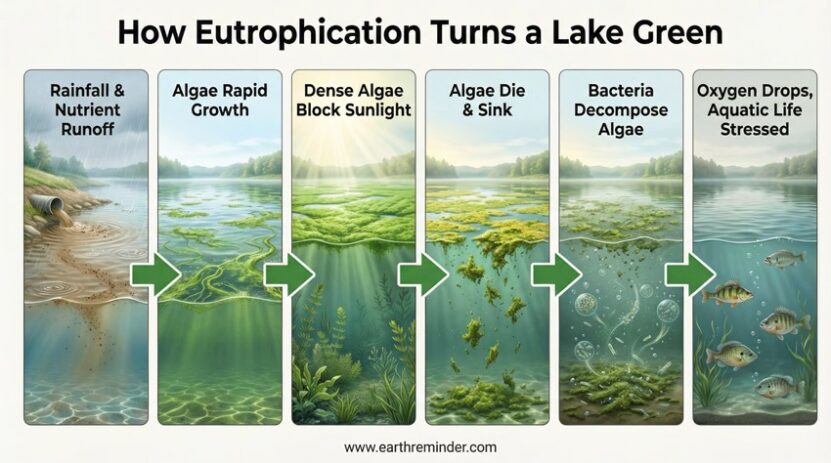
Nutrients support biological production in lakes and ponds. When nutrient concentrations become too high, algae growth increases rapidly and water quality declines.
This process is called eutrophication.
Phosphorus drives most freshwater blooms
Phosphorus is usually the main nutrient controlling algae growth in freshwater systems.
Even small increases can trigger large blooms. Phosphorus commonly enters lakes attached to soil particles carried by runoff.
Key sources include:
- lawn and agricultural fertilizers
- soil erosion
- animal waste
- septic system leakage
- stormwater runoff
Reducing phosphorus inputs often produces the greatest improvement in water clarity.
Nitrogen supports plant and algae growth
Nitrogen also contributes to biological productivity. In nutrient-rich systems, nitrogen can accelerate plant and algae expansion.
Sources include:
- fertilizer runoff
- wastewater discharge
- decomposing organic matter
Some algae species can obtain nitrogen directly from the atmosphere, which allows them to dominate when phosphorus remains abundant.
Nutrients accumulate in the bottom sediments
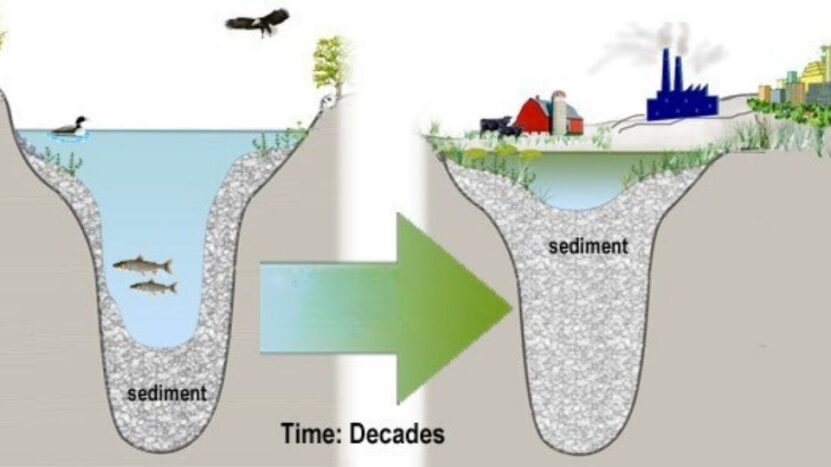
A large portion of nutrients entering a lake eventually settles into the bottom sediments.
Organic debris, such as dead algae and plant fragments, sinks and decomposes. During decomposition, nutrients can be released back into the water column.
When oxygen near the sediment becomes low, phosphorus release increases. This process is called internal loading.
Internal loading can sustain algae blooms even when external nutrient inputs decline.
Eutrophication produces visible changes
As nutrient concentrations increase, several patterns usually appear:
- algae blooms become more frequent
- water clarity declines
- plant growth expands in shallow zones
- oxygen fluctuations become more extreme
Over time, heavy nutrient enrichment can lead to persistent blooms, odor problems, and oxygen depletion that affects fish populations.
Why Lake And Pond Water Becomes Clear Or Cloudy
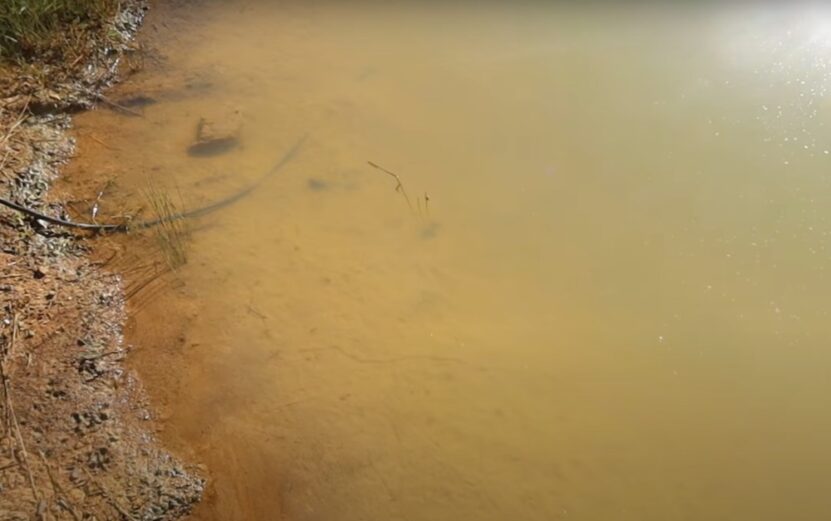
Water clarity tells a lot about what is happening inside a lake or pond. Clear water usually means fewer suspended particles and lower algae levels. When the water becomes cloudy, green, or brown, it usually points to sediment in the water or increased algae growth.
In most cases, three things control how clear or cloudy the water becomes.
Suspended sediment
Fine soil particles are one of the most common reasons water turns cloudy. Rain can wash sediment from nearby land into lakes and ponds, especially where soil remains exposed or shorelines erode.
Typical sources include:
- erosion from banks and shorelines
- runoff from agricultural land or construction areas
- livestock entering the water
- bottom disturbance from fish that stir up sediment
Sediment can stay suspended for long periods, especially in shallow ponds where wind or fish activity keeps particles moving.
Algae growth
Microscopic algae floating in the water column can also reduce clarity. When nutrients such as phosphorus and nitrogen increase, algae populations grow rapidly.
As algae multiply, the water may develop a green color and visibility decreases. Large blooms can also create surface scums and contribute to oxygen fluctuations.
Light penetration and plant growth
Sunlight moving through the water determines how deep aquatic plants can grow. Clear water allows light to reach deeper areas, supporting plant growth farther from the shoreline.
Testing The System: The Key Water Quality Measurements
To understand what is happening in a lake or pond, water needs to be tested regularly. A few basic measurements already reveal most water quality problems.
Dissolved oxygen
Dissolved oxygen shows how much oxygen is available for fish and other aquatic life. Low oxygen levels can stress fish and may lead to fish kills, especially during warm weather.
Oxygen levels usually drop during the night and rise during the day as plants and algae produce oxygen through photosynthesis.
Water temperature
Temperature affects both oxygen levels and biological activity. Warm water holds less oxygen and allows algae and bacteria to grow faster.
In deeper lakes, temperature differences between surface and bottom water can also create layers that limit mixing.
pH
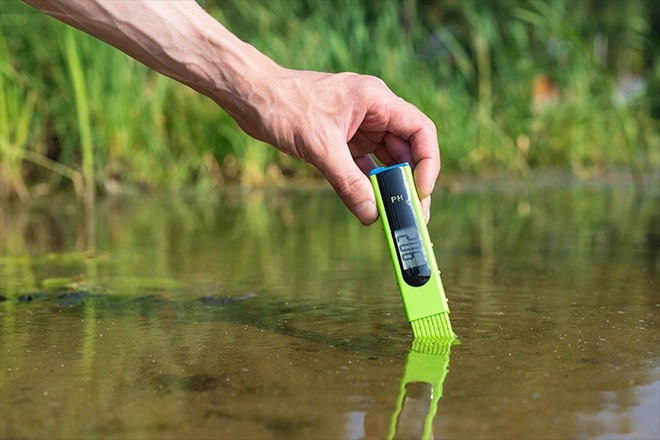
pH shows how acidic or alkaline the water is. Most lakes and ponds stay within a moderate range where fish and plants can survive without stress.
Large swings in pH can signal heavy algae growth or chemical imbalance.
Nutrient levels
Testing for nutrients such as phosphorus and nitrogen helps determine if the water has the conditions needed for algae blooms.
Higher nutrient levels usually lead to more algae growth and lower water clarity.
Tools Used To Monitor Lake And Pond Health
Several simple tools help measure water conditions and track changes over time. These tools allow lake managers or property owners to monitor water quality without complicated equipment.
Secchi disk
A Secchi disk measures water clarity. The disk is lowered into the water until it can no longer be seen. The depth at which it disappears shows how clear the water is.
Tracking this depth over time helps identify changes in algae levels or sediment.
Dissolved oxygen meter

A dissolved oxygen meter measures how much oxygen is present in the water. These meters are often used together with temperature probes to understand oxygen conditions at different depths.
pH and conductivity meters
Handheld meters can quickly measure pH and conductivity. These measurements help track chemical changes and detect possible pollution entering the water.
Water sampling bottles
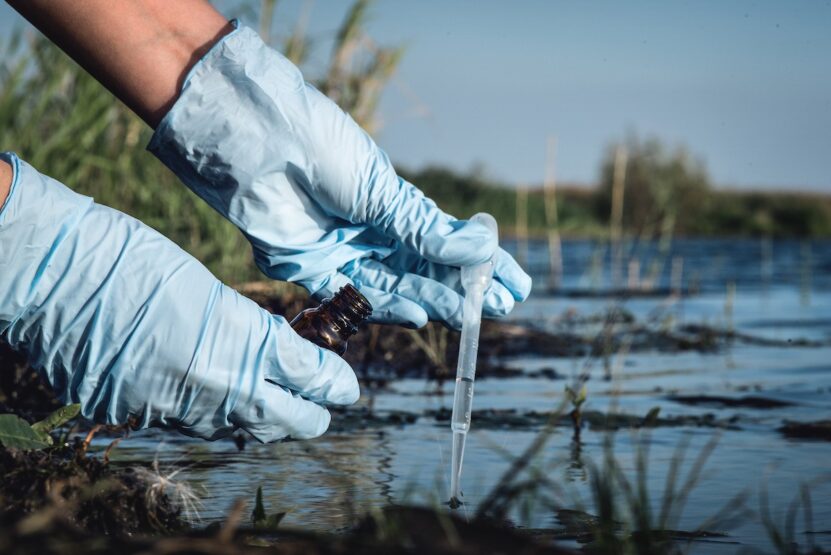
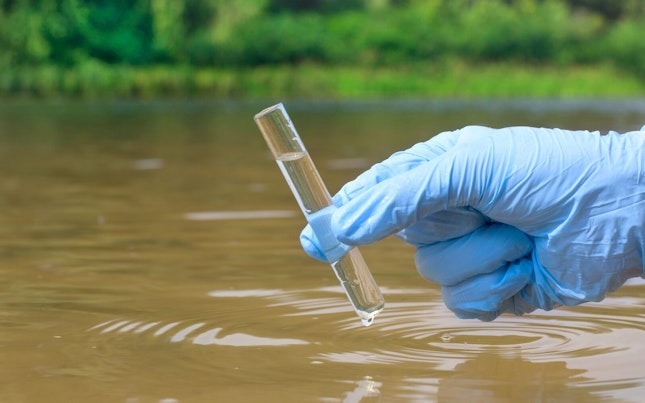
Simple sampling bottles allow water to be collected and sent to laboratories for nutrient testing. These tests provide more detailed information about phosphorus, nitrogen, and algae levels in the water.
Equipment Used To Improve Lake And Pond Water Quality
When testing shows declining water quality, several types of equipment can help improve conditions.
Most solutions focus on increasing oxygen, improving water circulation, or removing excess plant material and organic buildup.
Aeration systems
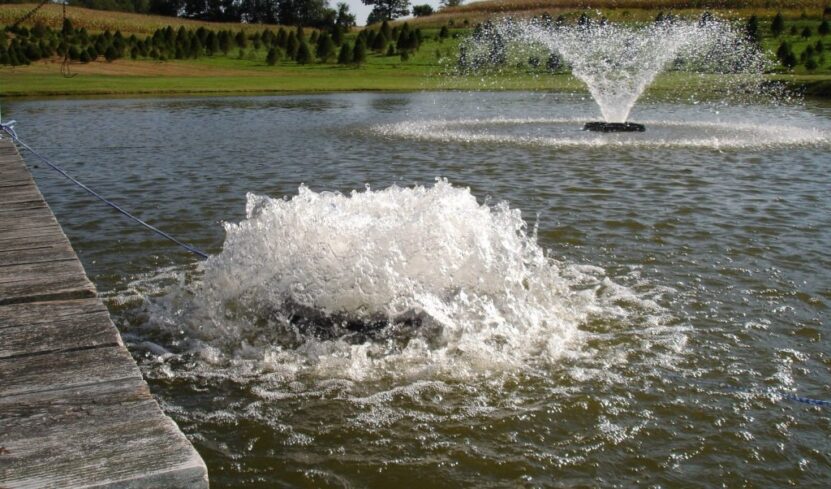
Aeration equipment adds oxygen to the water and improves circulation. Diffused aeration systems push air through hoses and diffusers placed on the lake bottom. Rising air bubbles move water upward, allowing deeper water to mix with the surface.
This circulation helps maintain more stable oxygen levels and can slow the buildup of organic sediment on the bottom.
Surface fountains and circulators
Surface fountains and water circulators move large volumes of water and increase contact with air. This movement improves oxygen exchange and helps prevent stagnant zones where algae and odor problems often develop.
Circulation systems are especially useful in smaller lakes and ponds where natural mixing from wind may be limited.
Mechanical removal equipment
In some situations, removing excess vegetation or organic material becomes necessary. Mechanical harvesters, rakes, and hydro-rakes can remove dense plant growth and algae mats.
Removing this biomass prevents large amounts of decaying plant material from settling on the bottom, which would otherwise consume oxygen during decomposition.
Water circulation equipment
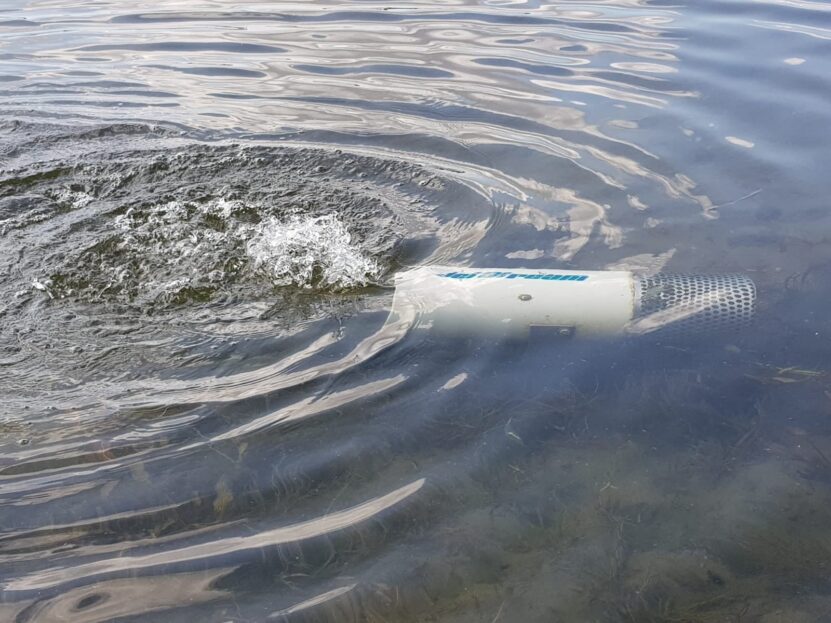
Water circulation devices can also help move sediment and organic buildup away from shorelines or swimming areas.
One example is the JetStream water circulator, often used as a water blower or muck blaster to push water along the bottom and keep material from settling.
The JetStream moves water through the entire water column and helps clear organic buildup from beaches, docks, and shallow areas.
Common Signs That A Lake Ecosystem Is Losing Balance
When water quality begins to decline, lakes and ponds usually show visible warning signs. These signals often appear gradually before more serious problems develop.
Frequent algae blooms
One of the most common indicators is repeated algae growth. Water may turn green, develop surface scums, or produce unpleasant odors. Algae blooms usually point to elevated nutrient levels, especially phosphorus.
Declining water clarity
Cloudy or murky water often indicates high sediment or algae concentrations. When clarity drops noticeably compared to previous seasons, it usually signals a change in nutrient inputs or increased biological activity.
Excessive plant growth
Rapid expansion of aquatic plants in shallow areas can also indicate rising nutrient levels. Dense plant beds may block sunlight, restrict water movement, and create large amounts of organic material that later decomposes on the bottom.
Low oxygen and fish stress
Fish behavior can reveal oxygen problems. Fish gathering near the surface, slow movement, or sudden fish deaths often occur when dissolved oxygen levels drop too low.
These warning signs usually develop together, making early monitoring important for maintaining a healthy system.
The Characteristics Of A Stable, Healthy Water System
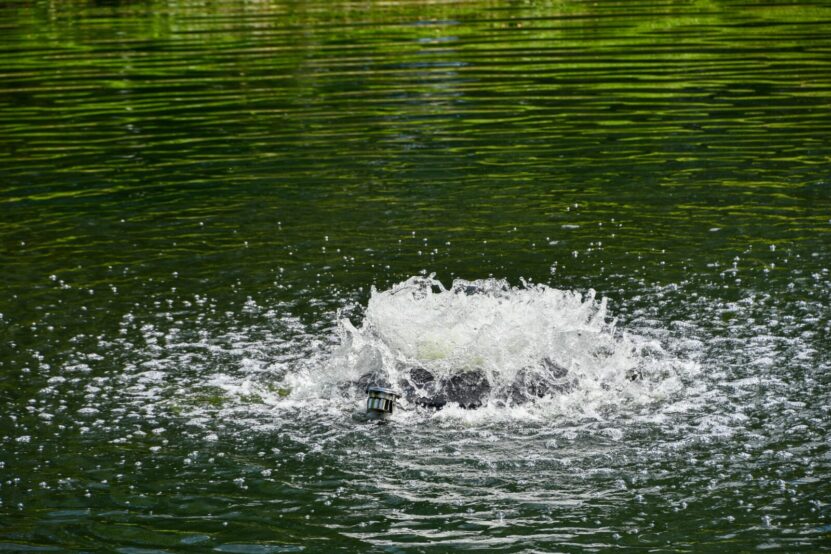
Healthy lakes and ponds maintain a natural balance between nutrients, oxygen, and biological activity. While every waterbody is different, stable systems tend to share several common characteristics.
Consistent oxygen levels
Oxygen levels remain high enough to support fish and aquatic organisms throughout most of the water column. Severe oxygen depletion becomes rare, even during warm summer periods.
Moderate algae and plant growth
A healthy system contains algae and aquatic plants, but growth stays within manageable levels. Plants provide habitat for fish and insects without overwhelming the shoreline or blocking open water.
Good water clarity
Clear or moderately clear water allows sunlight to penetrate the upper part of the water column. This supports balanced plant growth and stable biological activity.
Balanced nutrient levels
Nutrient concentrations remain low enough to prevent frequent algae blooms. When nutrient inputs stay controlled, lakes and ponds maintain more stable conditions over time.
Conclusion
Lake and pond water quality depends on a combination of physical conditions, nutrient inputs, and biological activity. Oxygen levels, temperature, water clarity, and nutrient concentrations all interact to shape how a waterbody behaves.
By understanding the basic processes behind these changes, it becomes easier to recognize when a lake is healthy and when problems may be developing. Regular testing, proper monitoring tools, and the right circulation or aeration equipment can help maintain stable conditions.